3D VISUALIZATION SDK
Iray+ Software Developer Kit
Create stunning photorealistic scenes in your software applications using Iray+, a rendering toolkit for integration into CAD and 3D design applications.
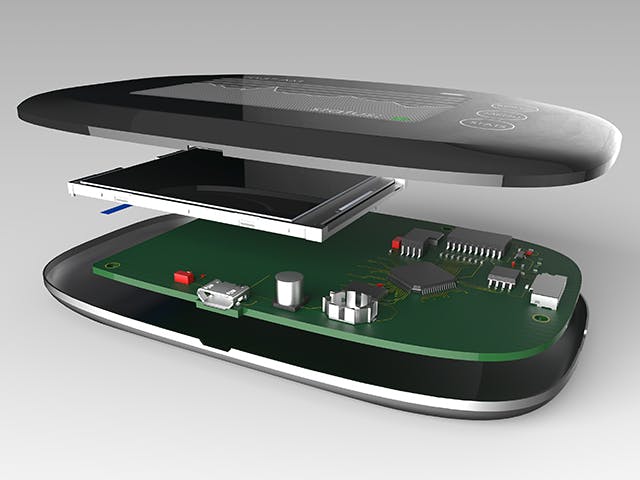
Why Iray+?
Enable your customers to generate stunning photorealistic scenes at the click of a button.
Iray+ is our high-end 3D visualization SDK (Software Developer Kit) that enables you to rapidly deliver new and improved applications with more powerful rendering performance.
Developed by leading visualization experts, Iray+ is integrated into 3D modeling applications across many industries to deliver a seamless visualization workflow, without the need for end-users to develop expertise in rendering.
Showcase your best designs with photorealistic images and videos, including physically-based lighting and materials. Iray+ is a mature solution that builds on original Iray technology from NVIDIA to provide all the features you need to achieve great results.
See what's included
Physically based lighting
Generate photorealistic scenes that replicate the physical interactions between light rays and materials. Iray+ allows the user to customize a vast range of lighting and material options to achieve the result you require. Images are progressively refined and the path tracing calculations result in realistic lighting, including caustics effects, which can also be trusted for accurate sun and lighting studies.
Physically based materials
Access a wide catalogue of physically-based materials for use in a range of real-world situations. Physically-based lights and materials combine to deliver results that mimic the real world.
Iray's Material Definition Language (MDL) defines the material properties and parameters for all components—surface color, reflections and refractions, light emissions, volumetric scatter, displacements and bump maps— all of which are easily interchangeable.
Caustics
Enhance your photorealistic scenes with caustics. Caustics can be seen in everyday life, from the light distortions at the bottom of a swimming pool to the light patterns being refracted from a transparent object, like a wine glass. While caustics are indirect light sources that are difficult to capture, Iray's dedicated caustic sampler captures them quickly and efficiently for enhanced visualization.
Depth of field
Enhance the realistic look of your images with depth of field. Iray+ cameras mimic many of the characteristics of real world cameras. Depth of field is an effect that can be used to change how objects appear in any given scene; by setting appropriate aperture values and focus distances, you can achieve natural looking depth of field effects. Large aperture values can be used artistically to create more appealing renders that focus the viewers' attention on where you want it to be, while making the rest of the scene out of focus to create realistic depths.
Motion blur
Capture realistic movement of objects in your images, replicating the effect of using a camera with a slow shutter speed. This can be used to convey a sense of movement and energy when rendering dynamic scenes. Relatively static scenes can also benefit from a subtle use of the effect as this can enhance the realism of your rendered images.
Instancing
Render a large number of replicated objects with only a minimal impact on memory and render resources. Groups of replicated geometry meshes can be easily constructed programmatically with a relatively small number of API calls. This technique is primarily used for objects such as trees, grass, buildings, furniture etc. Iray also allows you to vary materials across instances to minimize the appearance of repetition.
AI denoiser
Leverage GPU accelerated artificial intelligence to dramatically reduce the time to render a high fidelity image that is visually noiseless. Rapid performance enables you to iterate creative decisions and achieve your preferred result much more quickly.
Light Path Expressions (LPE)
Capture specific lighting interactions, such as capturing only rays that bounce off of a specific object, or which originate from a particular light source. These can be composited together in post-processing, allowing creative control to recolour lights or objects, alter the relative brightness of lights, or even switch them off entirely. Multiple LPE canvases can be rendered in parallel, alongside a full standard render, with negligible overhead.
Subsurface scattering
Simulate the effect of light penetrating an object or surface that is not 100% opaque. Instead of being entirely reflected, as with metallic or diffuse surfaces, a proportion of the light is absorbed by the material, and scattered internally, before exiting the material in a variety of directions. Many materials in real world situations exhibit subsurface scattering, such as skin or wax.
Volumetrics
Simulate the behavior of light within transparent and translucent materials of varying types, from thin mists and haze to murky ocean waters. Absorption and scattering can be controlled independently of each other and can also affect the color of light passing through. These volumetric materials can be used to create effects like colored smoke, beams of sunlight through fog or water, or even-semi opaque plastics.
Cadalog
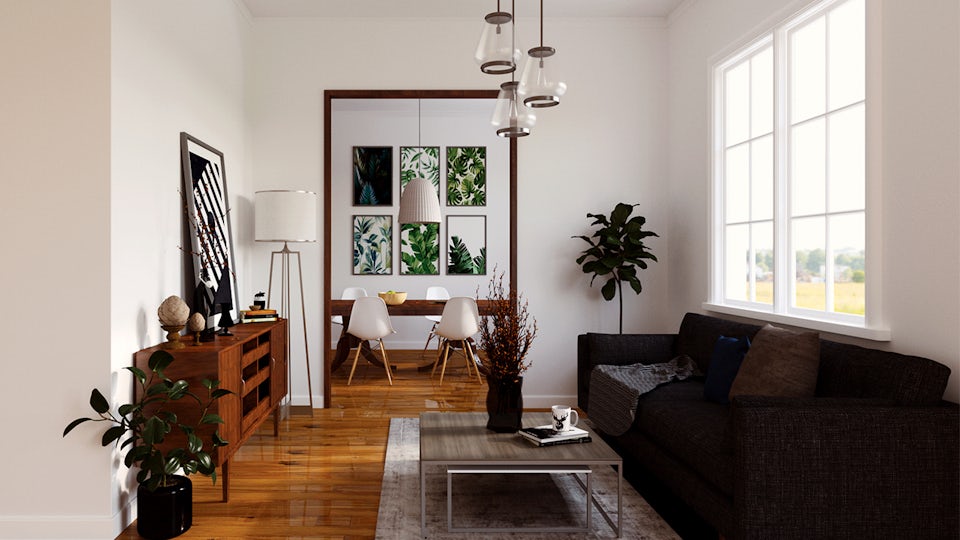
CAD software developer and distributor uses Iray+ to provide realistic light and shadow distribution
Company:Cadalog
Location:Bellingham, Washington, United States
Stay connected with PLM Components
Read the blog
Gain new perspectives on PLM Components and the PLM market in general.